
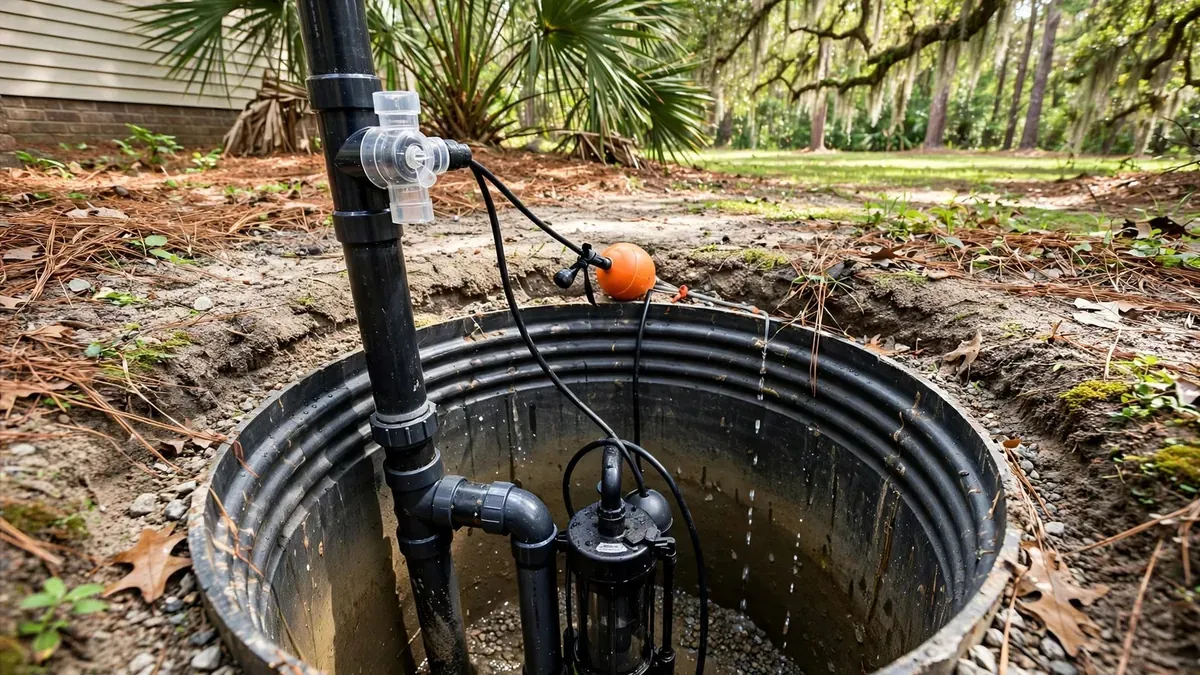
Backup types compared.
Pick by what your house has and how long outages last.
| Type. | How it works. | Limits. |
|---|---|---|
| Battery backup pump. | A second pump runs on a deep-cycle battery when power fails. | Run time depends on the battery and inflow. |
| Water-powered backup. | Uses city water pressure to pull water from the pit. | Needs municipal water, wastes water, not for wells. |
| Standby generator. | Powers the whole house including the pump. | Higher cost, covers much more than the pump. |
| Dual primary pumps. | Two pumps with alternating floats. | Do not help in a power outage by themselves. |
What drives the price.
The battery is the largest recurring item. A larger deep-cycle battery runs longer and costs more, and it needs replacing every few years. The pump itself varies with capacity. The controller and charger set how reliably the system starts and how well the battery is kept.
Installation adds the check valve, the discharge connection, the alarm and any electrical work. A pit that is too small for two pumps may need to be replaced or enlarged.
Want a backup before the next storm? Call and we will size it for your pit.
Call (855) 575-2890Sizing the backup.
Size by how much water your pit receives in the worst storm and how long the power may stay off. A pump moving a few thousand gallons per hour for an hour or two is typical for a household.
A high-water alarm tells you if the primary pump fails, which matters as much as the backup itself. The alarm should sound or text, so you hear it when you are away.
How the install goes.
Check the pit.
We measure the pit, the existing pump, the check valve and the discharge route.
Mount the backup pump.
A second pump is set at a slightly higher float height than the primary, often on the pit wall or a bracket.
Place the battery and controller.
The battery sits in a vented box on a shelf, with the charger plugged into a protected outlet.
Connect the discharge.
The backup shares the discharge line through a second check valve, so it does not push water back into the first pump.
Test.
We cut power to the primary and fill the pit to confirm the backup starts and the alarm sounds.
Maintenance that keeps the system honest.
Test the system twice a year. Pour water into the pit with the primary unplugged and watch the backup start. Check the battery terminals for corrosion and the charger light.
Batteries lose capacity with age. Plan to replace them every three to five years, or sooner if the charger shows a fault.
How to compare quotes.
Ask each contractor the same questions.
- What battery capacity is included, and how long will it run at typical inflow?.
- Is there a high-water alarm, and is it audible or does it send an alert?.
- Is a second check valve included?.
- Does the quote include the electrical outlet and any needed work?.
- Is the battery warranty described in plain terms?.
- Is the price stated clearly before work starts?.
What a backup will not do.
A backup does not stop water from reaching the pit. It only keeps the pump running. If your basement floods because the pit is too small or the drain tile is clogged, a backup will not fix it. See sump pump repair and basement waterproofing for the larger picture.
Testing your system before the storm.
Do not wait for the first heavy rain to learn whether the backup works. Unplug the primary pump, pour water into the pit until the float lifts and watch the backup start and the alarm sound.
Plug the primary back in and make sure it restarts. Write the test date on the lid of the pit.
If you are away often, ask about an alarm that sends a text or phone alert, so a failure is not a surprise when you return.
Alternatives when a battery is not enough.
In an area where outages can last a day or more, a battery backup runs out. A standby generator that powers the pump, a furnace and a few lights is the larger answer. It costs much more, so it only makes sense if outages are common where you live.
A second approach is to reduce the load on the pump with better grading and gutters, so the pit receives less water and the battery lasts longer.
Matching the backup to your pit.
A narrow pit may not take two pumps side by side. Sometimes the backup mounts higher on a bracket, and sometimes a second pit is added. Measure your pit width and depth before you shop, and tell the installer what you found so they bring the right parts.
Electrical rules that affect the price.
Basement receptacles must have ground-fault protection under the National Electrical Code (NEC), NFPA 70, and a pump on a dedicated circuit may need that protection added. That can change the quote, so ask whether an electrician is involved. The discharge line also has to follow the International Plumbing Code (IPC) as adopted in Ohio.
Outages, rivers and the discharge line in Ross County.
Chillicothe lies where the Scioto River meets Paint Creek, and the Midwestern Regional Climate Center's account of the March 1913 flood describes the river cresting near 40 feet and about 70 percent of the city flooded. Levees now protect the city from a flood of that size, but groundwater still rises in a wet season, and storms that raise it are the ones that knock out power.
If your discharge line needs to be extended underground, Ohio811 asks you to notify it at least two working days before digging, not counting weekends and legal holidays. Call 811 or use OHIO811.org. Homes in villages such as Kingston face the same rule, and we handle the call for work we perform.
Battery backup questions from Chillicothe homeowners.
.
It depends on the battery size and how fast water enters the pit. A larger battery runs longer. We estimate it for your pit.
.
Two pumps help if one fails. They do not help in a power outage.
A backup or a generator covers the outage.
.
It is possible, but the check valve, discharge and alarm need care. A mistake can cause the backup to fail when needed.
.
Every three to five years, or as the manufacturer recommends.
.
Yes. Call (855) 575-2890.